
ALTA Survey for Commercial Sites With Private Service Roads
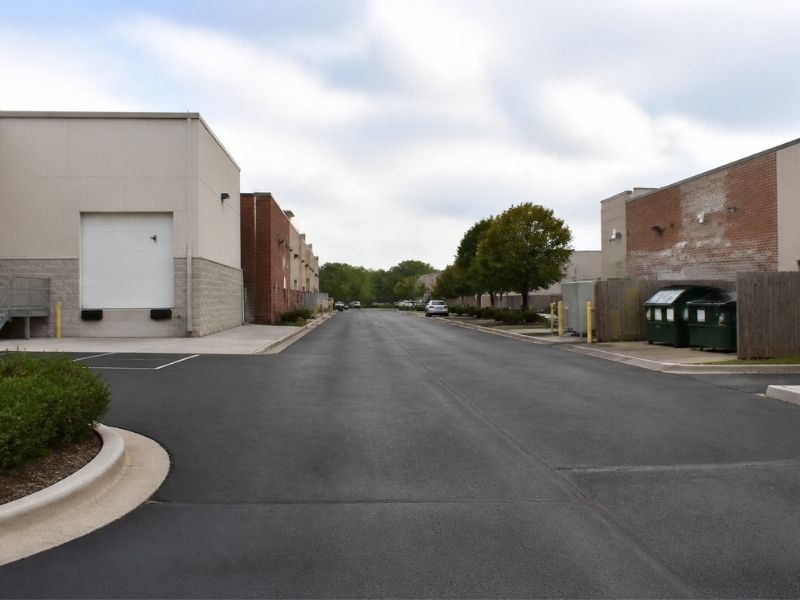
The road behind a strip center looks like any other paved drive. Delivery trucks use it, tenants park along it, and nobody gives it much thought. Then a sale comes along, and someone asks who owns that road and who has the right to use it. An ALTA survey is often the first document that answers those questions clearly.
Private service roads cause more closing trouble than most buyers expect. Access rights may be split across several deeds, the pavement may not sit where the easement says, and a neighbor’s sign or dumpster may be parked in the middle of it. Plan the survey with the road in mind from the start. That way the title company, lender, and buyer can see the full picture before the deal is locked in.
ALTA Survey Considerations for Privately Maintained Commercial Roads
An ALTA survey is a detailed land title survey built to national standards set by the American Land Title Association and the National Society of Professional Surveyors. It shows boundaries, improvements, easements, and access, and it ties those features to the title documents. For sites with private roads, that link between the drawing and the records is where most of the value lies.
A private service road is a drive that isn’t owned or maintained by a public agency. It may serve one property or several. Many sit inside shopping centers, business parks, and industrial campuses, where owners share the road under a recorded agreement.
The ALTA asks the surveyor to show evidence of access and the streets that border the property. On a site with a private road, that means mapping the road itself, where it meets public streets, and any gates, curb cuts, or driveways along the way. The survey should also note whether the road connects directly to a public right-of-way or passes over land owned by someone else first.
Roadway Ownership and Recorded Access Rights Across Parcels
Ownership is the first question to settle. A private road may sit entirely on the property being bought, on a neighbor’s land, or on a separate parcel owned by an association. The ALTA survey shows where the road falls in relation to each property line.
Access rights come from recorded documents. These may include easements, reciprocal easement agreements, declarations, or road maintenance agreements. A reciprocal easement agreement, often called an REA, is a contract where several owners grant each other rights to use shared areas like drives and parking. These documents usually appear in Schedule B of the title commitment, and the surveyor reviews them to locate any rights that can be plotted.
Watch for gaps in the chain of access. A property may have rights over a neighbor’s road, but that road may not reach the public street without crossing a third parcel. If the third owner never granted access, the buyer could face a problem later. The survey should make that route clear.
ALTA Survey Details for Shared Service Road Easements
When an easement has a clear written description, the surveyor can plot it on the map. The drawing shows the easement’s width, location, and recording information. That lets everyone compare the legal strip to the actual pavement in one view.
Some easements can’t be plotted. A blanket easement may cover an entire parcel without naming a specific path. Others use vague wording, such as “access over existing drives.” In those cases, the surveyor notes that the easement affects the property but can’t show an exact location.
Pay attention to how the pavement lines up with the easement. Roads get widened, patched, and rerouted over the years. Part of the drive may now sit outside the recorded strip, which can leave that section without clear legal access. A survey that shows both lines helps your attorney decide whether an amended easement is needed.
Maintenance terms don’t usually show on the drawing. Who pays for paving, snow removal, and lighting is set out in the agreement itself. Read those documents with your attorney, since they can affect operating costs for years.
Encroachments and Right-of-Way Conflicts Along Private Access Routes
An encroachment is something that extends onto land or into an easement where it doesn’t belong. Along private roads, common examples include signs, light poles, parking stalls, fences, gates, loading areas, and dumpster pads. Each one can block traffic or create a dispute between owners.
The ALTA survey maps these items and shows where they cross property lines or easement limits. Under the 2021 standards, clients can also request a summary of encroachments through Table A. That summary makes it easier for the buyer, lender, and title company to review each issue without hunting through the drawing.
Conflicts can also arise where the private road meets a public street. The public right-of-way may be wider than it looks, and part of a curb, sign, or entrance may sit inside it. Ask your surveyor to show the right-of-way lines clearly so these issues come up before closing.
Survey Documentation for Future Road Widening and Site Reconfiguration
Many buyers plan changes after closing. They may want to widen a service road, add a new entrance, move truck traffic, or split off a pad site. The ALTA survey becomes the base map for that work, so it helps to plan the scope with future goals in mind.
Table A items can add useful detail. Topographic mapping shows grades for road design and drainage. Utility locations help engineers avoid buried lines during widening. Choose these items with your design team, since each one adds time and cost.
Changing a shared road usually needs more than a design. Other owners with rights in the road may need to sign off on relocations or new widths. Local agencies may also review new entrances and connections to public streets. Requirements vary by agreement, jurisdiction, and project scope, so confirm them early.
Your attorney can use the survey to draft amended easements, and your engineer can use it to design the new layout. When the road changes, a new or updated survey can show the final location for the record. That keeps the next sale or refinance from running into the same questions.
Frequently Asked Questions
Can a title company insure access over a private road?
Often, yes, when the access comes from a recorded easement. Many title policies list an access easement as a separate insured parcel. Coverage depends on the documents, the survey, and the title company’s review. Ask your title officer early how access will be handled in the policy.
Does an ALTA survey show who maintains the private road?
Not usually. The survey shows where the road and easements are, along with their recording information. Maintenance duties and cost sharing are set out in the recorded agreements. Review those documents with your attorney to understand your future obligations.
Do we need a new survey if the service road is relocated?
In most cases, an updated survey is a good idea after a relocation. The old map won’t show the new road or any revised easement. Lenders and title companies may want current information before a refinance or sale. Talk with your surveyor about updating the existing survey instead of starting from scratch.
