
Why the New Encroachment Summary Matters Under the 2026 Standards
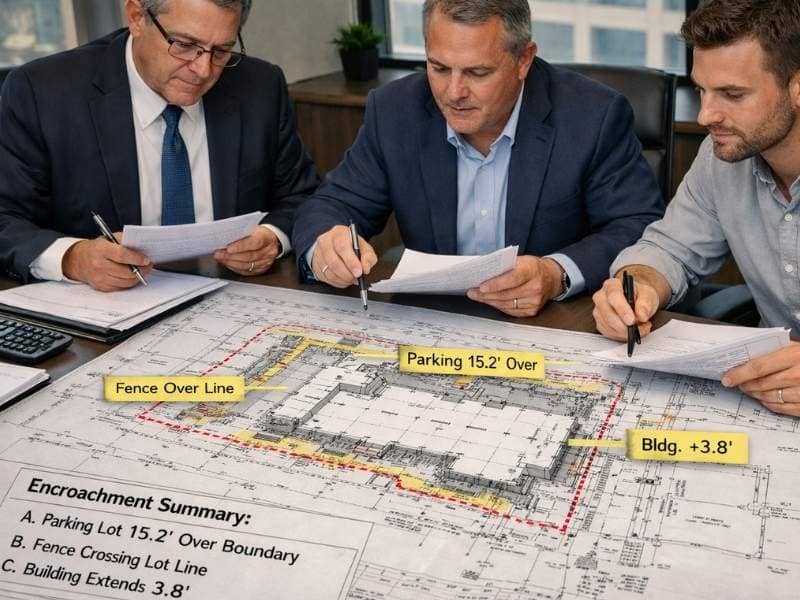
The ALTA encroachment summary is one of the best new additions to the 2026 ALTA/NSPS Standards. When a surveyor finds features that may cross property lines or easement areas, those findings now have a set place on the survey. Before this change, those notes were spread across pages of drawings and notes. Now the most key ones appear in one section. That’s a big help when a deal moves fast and a few people need to review the same survey at the same time.
What an ALTA Encroachment Summary Is Designed to Highlight
An ALTA encroachment summary points out physical features that appear to cross or push into property lines, easement areas, or access paths.
It does not say what those issues mean from a legal standpoint. Its job is to show reviewers where the key findings are so they can ask the right next questions.
Think about what a surveyor sees on a busy commercial site. There might be a fence along what looks like the boundary line. A building roof might extend past the lot line. A parking lot might spill into a nearby easement. Each of those findings gets noted on the survey drawing. The encroachment summary pulls the most key ones into one spot so anyone reading the survey can find them fast.
The surveyor records what they see. Attorneys, title officers, and lenders are the ones who decide what to do next.
Why Encroachments Are Easier to Review When They Are Consolidated
When encroachment findings are grouped in one place, reviewers spend less time searching and more time looking at what matters.
A full ALTA survey on a commercial property can be dozens of pages long. It covers boundary lines, easements, setbacks, access points, and all the site items on the property. For a lender on a tight schedule, reading every page just to find potential encroachments takes too much time.
A summary fixes that. A title professional can go straight to the encroachment section. A buyer’s attorney can flag items that need a closer look. They don’t have to go through the whole drawing set. A lender can check whether findings affect the property’s value. That happens before the loan moves forward. When key findings sit in one place, details are far less likely to get missed.
Common Property Features That May Appear in an ALTA Encroachment Summary
The summary usually includes any feature the surveyor saw that appears to go beyond where it belongs. On most commercial properties, that list is longer than people expect.
Here are some examples:
- Fences: A fence that sits on or across a property line is one of the most common findings, especially when a property sits next to a neighbor.
- Retaining walls: Walls along slopes can go past the property line, often on older sites.
- Parking areas: Paved lots and driveways can push into easement areas or cross boundary lines, especially when a property has grown over time.
- Building overhangs: Roof eaves and balconies can go past the building’s edge and into a nearby lot or easement.
- Utility items: Electrical boxes and meter stands can end up outside the areas where they were first placed.
- Signs and access features: Monument signs, entry gates, and driveway aprons sometimes cross into a public right-of-way or a neighboring property.
These features get closer attention during due diligence. They can affect how a property is used, what title insurance covers, and what future work on the site might look like.
How the ALTA Encroachment Summary Supports Faster Transaction Reviews
The summary gives everyone in a deal a clear starting point for talking about physical conditions that may need to be resolved before closing.
Attorneys use it to find conditions that may need legal fixes. Lenders use it to check whether any encroachments could lower the property’s value. Title professionals use it to decide what conditions need to show up in the title commitment.
Buyers and developers use it for different reasons. A buyer looking at a retail property wants to know if a fence crosses the property line. That’s better to know before signing a contract, not after. A developer planning new work needs to know if a parking lot sits inside a recorded easement. They should find that out before paying for a site plan.
The summary does not answer those questions. It makes sure they get asked early enough to matter.
Why Early Visibility Into Encroachments Can Reduce Closing Surprises
Finding potential encroachments early gives all parties more room to act.
When an encroachment shows up late, options run out fast. A closing date is set. Money is lined up. Then someone finds that a roof extends past the property line. That puts pressure on all sides. Closing dates get pushed. Some deals fall apart over issues that were there all along but never came up until last week.
Finding problems early changes things. A buyer who spots a potential encroachment early can ask the seller to fix it. They can also lower the price or talk to an attorney first. A lender can ask for more details. That happens before they issue a commitment. A developer can check if the issue affects their plans before spending money on design. When details arrive too late, none of those choices are open.
