
How the 2026 ALTA Standards Affect Commercial Property Buyers
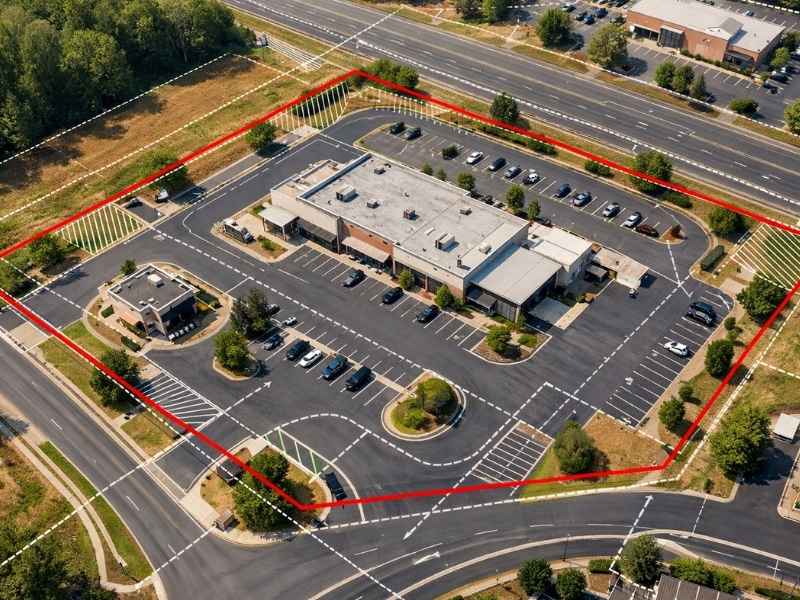
Commercial property buyers have a lot to think about before closing a deal. Contracts, financing, site checks, and legal reviews all happen at once. One thing that often gets missed is the ALTA survey. Under the 2026 ALTA/NSPS Standards, the survey plays a bigger role than ever in helping buyers know what they’re buying. Whether you’re buying a shopping center, an office building, or a warehouse or industrial site, the new standards give buyers more tools to make smart choices.
How the 2026 ALTA Standards Influence Commercial Property Risk Assessment
The 2026 ALTA Standards give commercial buyers a clearer picture of property risks before they commit to a purchase.
Every commercial property comes with unknowns. A boundary line might not sit where the seller thinks. An easement might limit how part of the site can be used. A nearby structure might cross onto the property. These conditions can change the value of a deal or create problems after closing.
ALTA surveys exist to surface those conditions before money changes hands. Under the 2026 Standards, surveyors follow new requirements that bring more detail and consistency to what gets noted. So when a buyer receives an ALTA survey today, it reflects a higher standard of reporting than surveys completed under older rules.
For buyers, that means better data going into the most important decision of the transaction. Knowing what conditions exist on a site helps buyers weigh risk, set real expectations, and decide whether a property fits their goals. That’s not just helpful during negotiations. It protects the investment long after the deal closes.
Why Early Survey Coordination Matters Under the 2026 ALTA Standards
Getting a land surveyor involved early in the transaction keeps the due diligence process on track.
Commercial real estate deals run on tight timelines. Lenders need documents. Attorneys need time to flag concerns. When an ALTA survey gets ordered too late, it creates a bottleneck. The closing window shrinks. Under the 2026 Standards, surveys can include more optional items than before. Some take extra time to prepare. Buyers who wait too long may end up rushing.
Early coordination helps on every front. The buyer tells the surveyor which optional items are needed. The lender confirms what the survey must include. The attorney flags easement or access questions early. When those talks happen early, the survey comes back right the first time.
What Commercial Buyers Should Review When Receiving an ALTA Survey
When an ALTA survey arrives, buyers should focus on the sections that affect how the property can be used and what comes with it.
Not every part of an ALTA survey matters equally to a buyer. Some sections are more likely to change the buying decision. Here’s where to focus:
- Boundaries: Confirm that the property lines match what the seller represented. Discrepancies here can affect usable areas and future site plans.
- Access: Check how the property connects to public roads. Limited or shared access can create problems for tenants, customers, and deliveries.
- Easements and rights-of-way: These are legal rights that allow others to use part of the property. They can limit where a buyer builds, parks, or runs utilities.
- Existing improvements: The survey shows where buildings, parking areas, and drives sit on the site. Buyers should check whether those features match their current and future plans.
- Adjoining conditions: Look at what sits next to the property. Nearby structures, roads, and utilities can all affect how the site works.
Buyers don’t need to read the survey alone. Attorneys and title professionals review it too. But buyers who understand what they’re looking at can ask better questions.
How the 2026 ALTA Standards Support Commercial Financing Requirements
Lenders rely on ALTA surveys to confirm that a property meets their requirements before they release funds.
Most commercial lenders won’t fund a deal without a current ALTA survey. That’s not a formality. It’s how lenders protect their position in a transaction. Before a bank or institutional lender commits to financing a commercial property, it needs to know that the site is what it appears to be.
The 2026 Standards help meet those requirements more fully than earlier versions. New reporting rules mean that surveys produced under the 2026 Standards carry more detail. Lenders get clearer information about boundaries, easements, access, and site conditions.
For buyers, this matters in a practical way. A survey that meets the 2026 Standards is more likely to meet lender requirements the first time. That reduces back-and-forth between the lender and the surveyor, which keeps the financing timeline moving. Delays in survey approval can push closing dates. In a competitive market, that kind of delay has real costs.
Buyers should confirm with their lender which Table A optional items are required. Getting that list to the surveyor at the start avoids revisions later.
Using ALTA Survey Information to Plan Future Property Improvements
An ALTA survey isn’t just helpful during the purchase. It becomes a planning tool once the buyer owns the property.
After closing, many commercial buyers move into planning mode fast. They want to expand a parking lot, add a building, or bring in new utility lines. All of those plans depend on knowing what the site already has and where the limits are.
The ALTA survey is one of the first things a buyer should share with their design team. It shows where structures, utility lines, easements, setbacks, and boundary lines sit. A developer who skips that step may design work that can’t be built.
Buyers planning new work should also check access points on the survey. Adding an entrance or changing traffic flow often means checking existing easements first. The survey shows those conditions before a design team starts.
The 2026 Standards also make surveys more uniform across the board. That matters when a buyer owns multiple properties or works with different surveyors across different markets. Consistent reporting means the information is easier to compare and use across a portfolio.
