
Key Changes Between the 2021 and 2026 ALTA/NSPS Standards
If you work in commercial real estate, you have probably seen an ALTA/NSPS Land Title Survey come up during a property deal. These surveys are a key part of buying or selling commercial property, getting title insurance, and doing proper due diligence. In 2026, the ALTA/NSPS standards got an important update. Knowing what changed helps everyone involved in a transaction stay on the same page. This post breaks down the main differences between the 2021 and 2026 versions in clear, simple terms.
Why the ALTA/NSPS Standards Were Updated in 2026
Rules do not stay the same forever, and that is a good thing. The real estate industry changes over time. New tools, new types of deals, and new ways of communicating push professionals to take a fresh look at how they work.
The ALTA/NSPS standards go through a formal review process. Surveyors, title companies, lenders, and attorneys all take part. Together, they look for areas where the old language causes confusion or where clearer guidance would help. The 2026 update is not a full rewrite. It is a careful set of improvements designed to make surveys more consistent and easier to use for everyone.
Think of it like updating a shared rulebook. The goal stays the same, but the instructions get clearer with each revision.
Definitions and Terminology Changes Introduced in the 2026 Standards
Language is one of the most common sources of confusion in any profession. When two people read the same word and come away with different meanings, problems follow. The 2026 standards deal with this by updating key definitions and making the language more precise in places where the 2021 version was not specific enough.
Some words and phrases that used to have loose meanings now carry clearer definitions. This helps surveyors know exactly what a lender or attorney needs when they ask for a specific survey item. It also helps title companies review finished surveys with more confidence.
On top of that, shared terminology cuts down on unnecessary back-and-forth. Instead of stopping to debate what a term means, all parties start from the same understanding. That saves time and reduces the chance of errors during a transaction.
Revisions to Table A Optional Items
Table A is one of the most hands-on parts of an ALTA/NSPS survey request. It is a list of optional items a client can ask the surveyor to include in the survey. Common examples are parking counts, flood zone details, and building setback measurements.
In the 2026 update, some Table A items were changed. Others got clearer explanations so that clients and surveyors read them the same way. A few items may also have been reorganized to make the table easier to read and use.
These changes matter because Table A sets the scope of the survey. When a client picks an item that now has a clearer definition, both the client and the surveyor know what to expect. As a result, there are fewer surprises when the finished survey comes in.
Before ordering a new survey, clients should go over the updated Table A with their surveyor and confirm which items fit their specific deal.
Updated Requirements for Deliverables and Survey Documentation
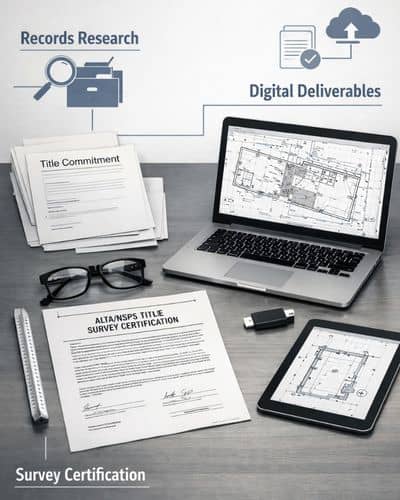
How a survey gets put together and handed over matters just as much as what it contains. The 2026 standards include updates to the documentation side of ALTA surveys, keeping up with how professional practices and technology have shifted since 2021.
Surveyors may now have updated guidance on certifications. A certification is the formal statement in a survey that confirms it meets the required standards. There may also be clearer direction on records research, which is the process of checking public records to find information about a property.
Digital files are also becoming more important as more deals rely on electronic records. The updated standards help make sure surveys work well in digital systems. Because of this, both surveyors and clients have clearer expectations about file types and how surveys get delivered.
How the 2026 Standards May Affect Commercial Real Estate Transactions
The 2026 updates have real effects on commercial property deals.
First, lenders and title companies may start requiring surveys that follow the 2026 standards for new transactions, even if a property already has a survey done under the 2021 rules. Because of this, buyers and sellers should find out early which version applies to their deal, before any deadlines are set.
Second, some changes may affect how long a survey takes or what it costs. If new documentation steps or Table A revisions add work to the process, timelines and budgets can shift. Talking early with the surveyor, attorney, and title company helps everyone avoid surprises at closing.
Finally, developers and lenders who manage several deals at once should make sure their teams know about the 2026 changes. Staying current helps keep transactions moving without unnecessary holdups.
